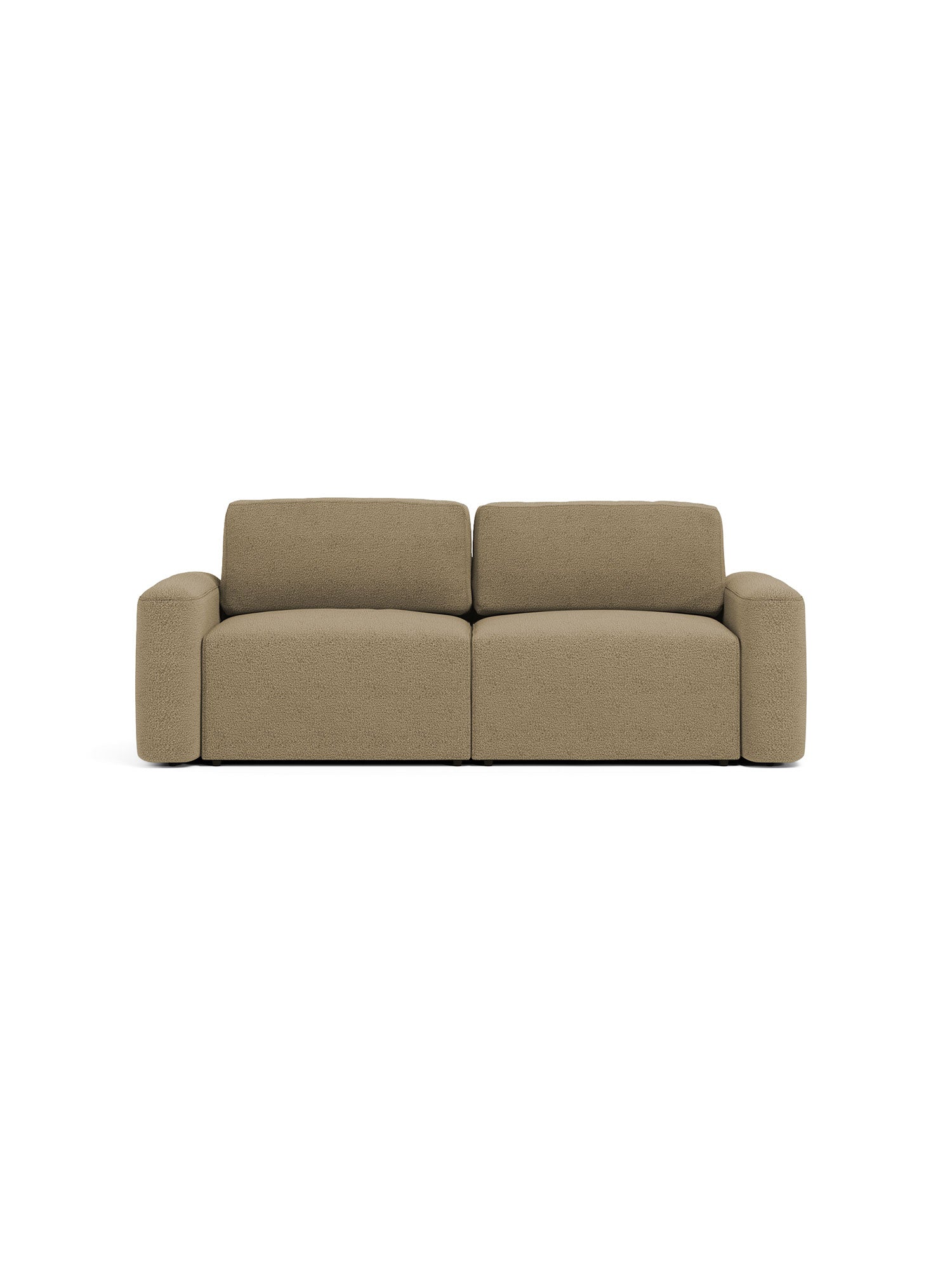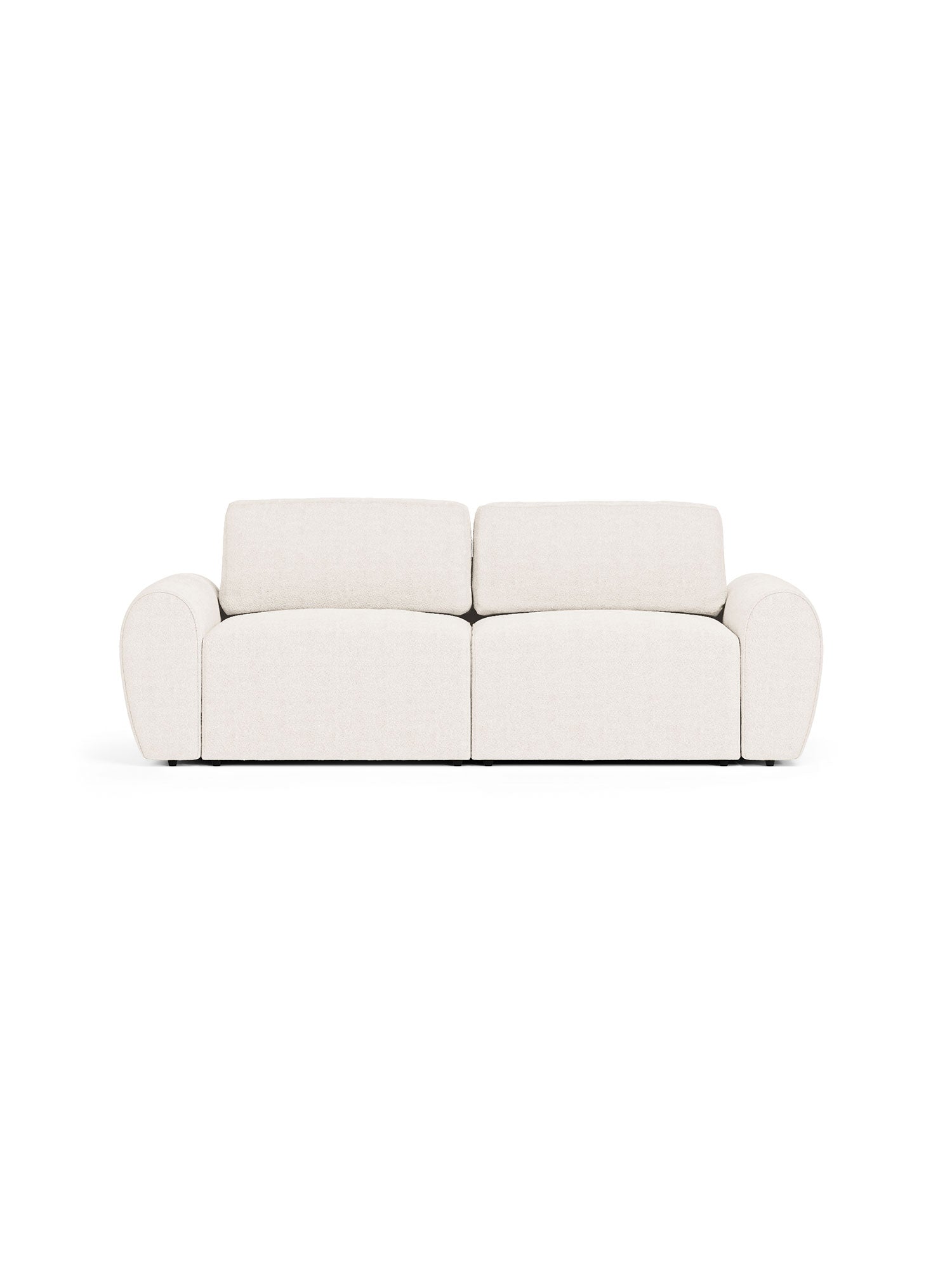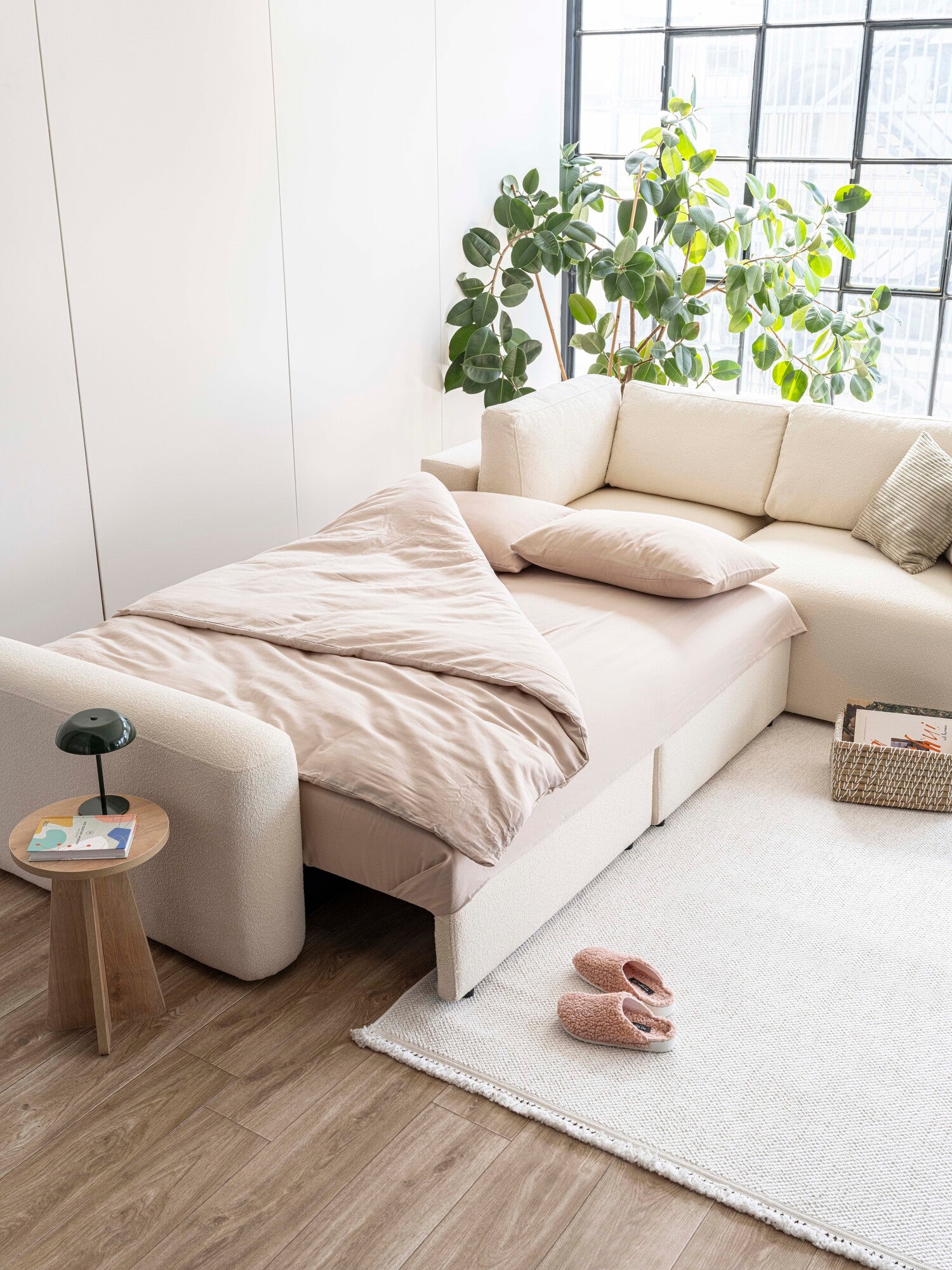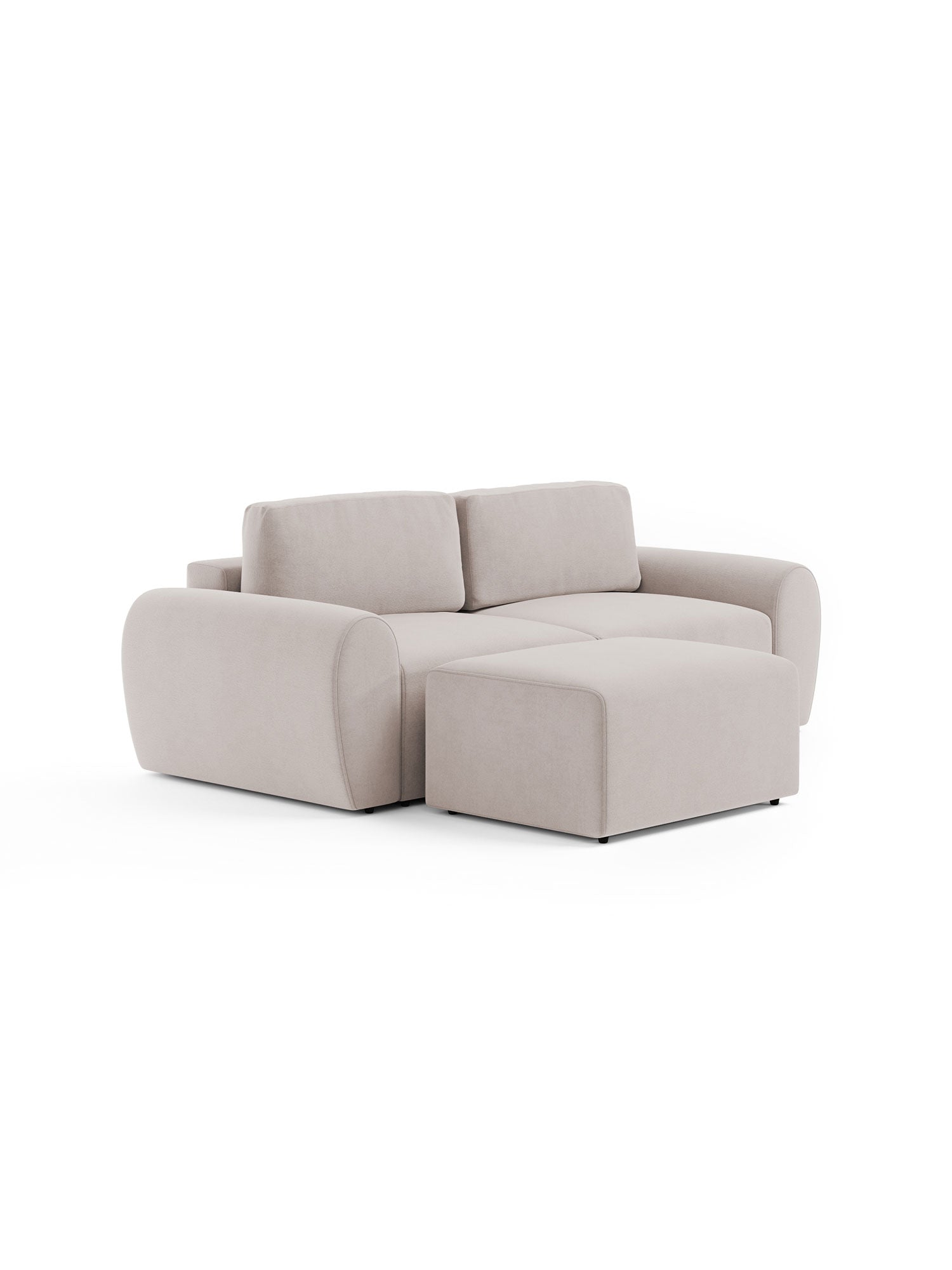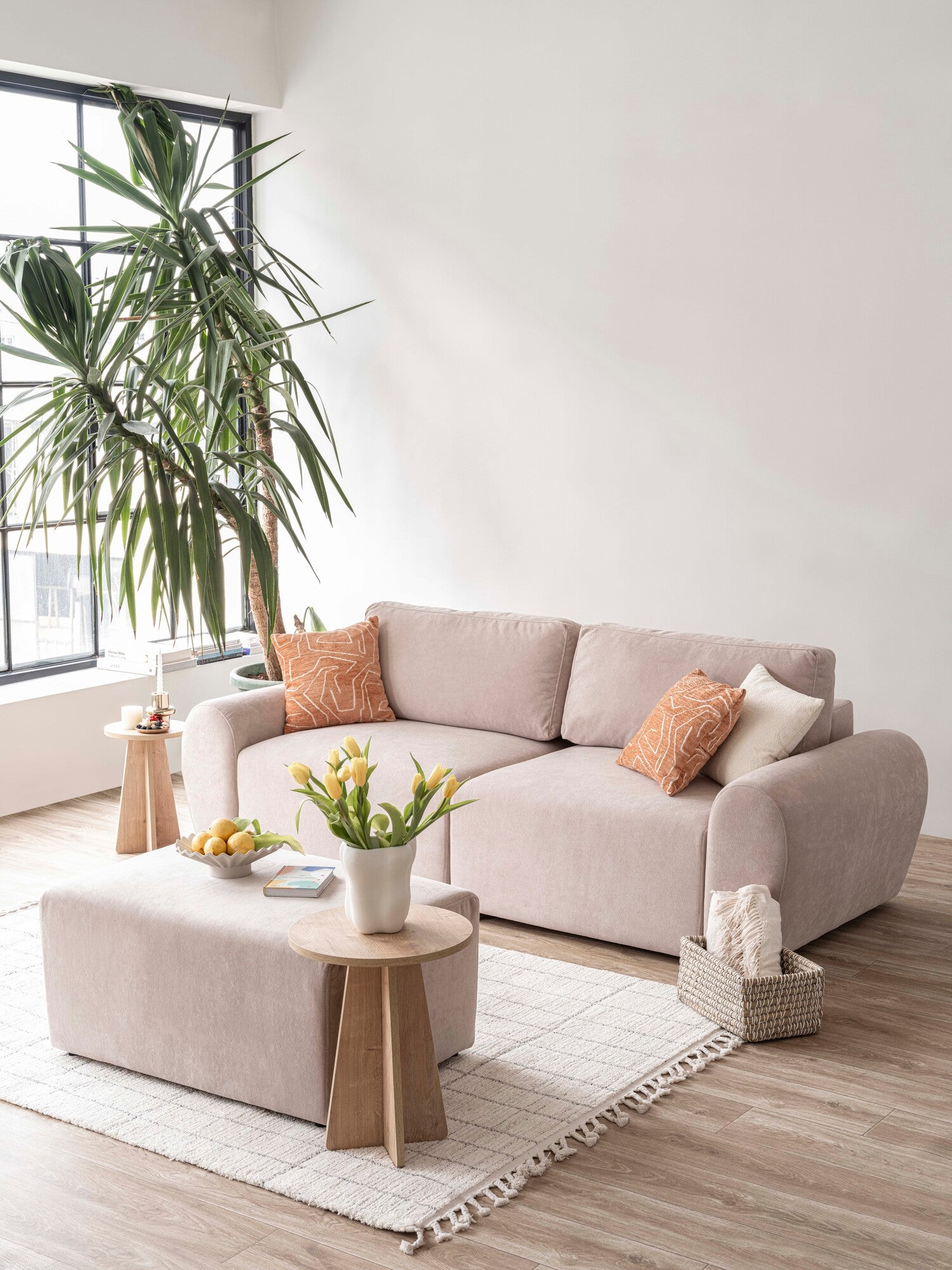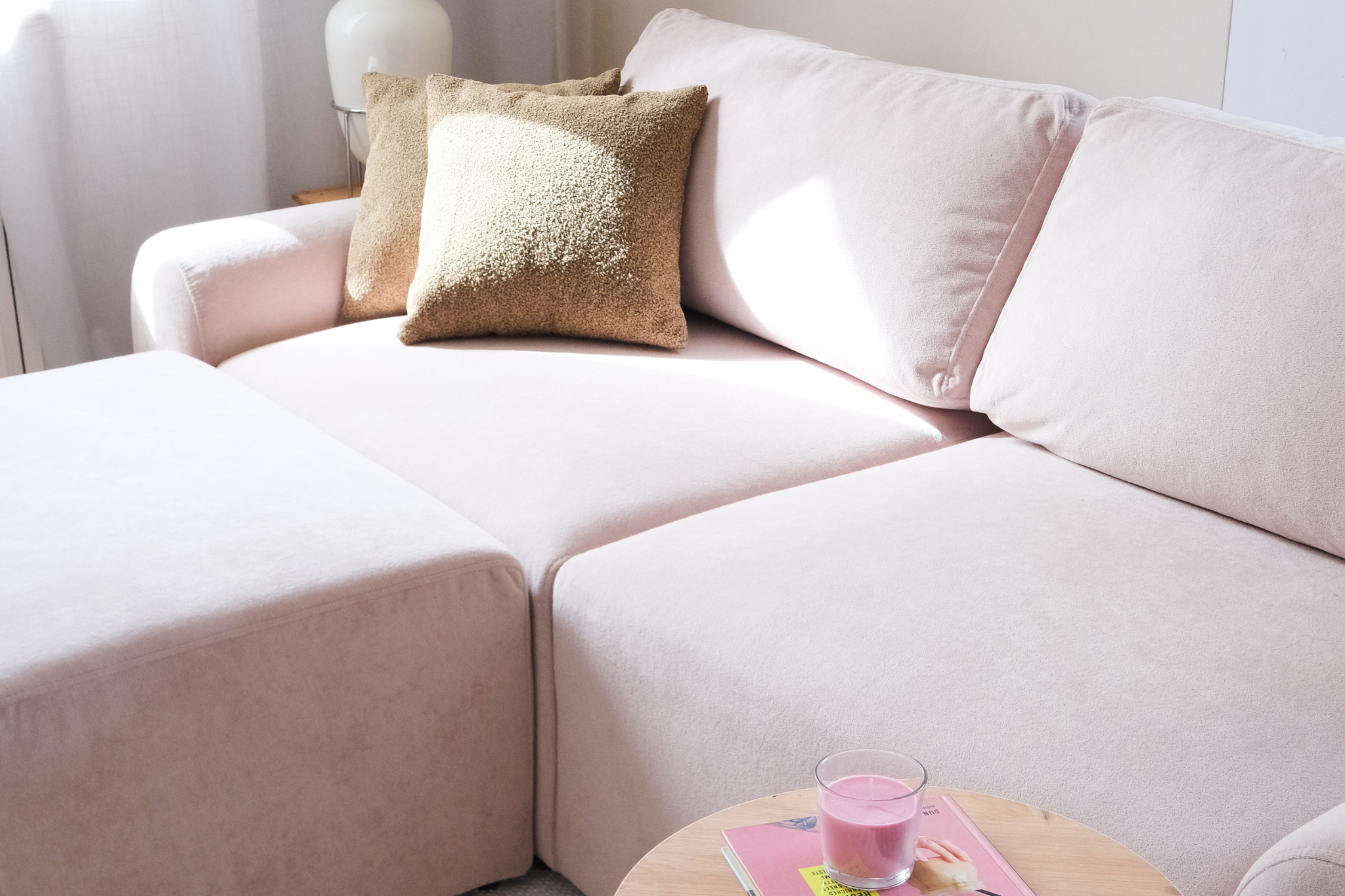


The main difference between a modular sofa and a sectional sofa is flexibility. A sectional is a large sofa made of connected sections that are fixed in one configuration. A modular sofa uses independent pieces that lock together and come apart freely, so you can rearrange the layout, add modules over time, or break the sofa down for moving. Both seat multiple people—but only one adapts when your life does.
If you’re a Canadian buyer weighing modular sofa vs sectional, this comparison will help. We’ll cover what each type actually is, how they stack up on the things that matter, and why the answer might be more obvious than you think.
What Is a Sectional Sofa?
A sectional sofa is a large seating unit made up of two or more sections that connect to form an L-shape, U-shape, or other fixed configuration. The pieces are designed to fit together in one specific arrangement and typically bolt or clip together permanently.
Sectionals are popular because they seat a lot of people and fill a room. You’ll find them in most Canadian furniture stores at a wide range of price points. Entry-level sectionals start around $1,000, which makes them accessible for first-time buyers.
The trade-offs show up over time. A fixed sectional couch can’t be reconfigured if you rearrange your room or move to a different apartment. Getting one through a tight hallway or narrow staircase is a well-documented nightmare. And if one section gets damaged, you’re usually stuck replacing the whole thing—because the sections aren’t sold individually after purchase. That inflexibility is exactly where modular sofas offer a fundamentally different approach.
What Is a Modular Sofa?
A modular sofa is built from independent pieces—corner modules, armless seats, chaises, ottomans—that connect and disconnect without tools. Each piece functions on its own and locks securely into any adjacent module, giving you a sofa that can change shape whenever you need it to.
Start with a three-seater in a condo. Move to a bigger place? Add a chaise and a corner piece to make it an L-shape. Hosting a party? Pull the modules apart for flexible seating. The same sofa grows, shrinks, and rearranges with your life—which is why modular has become the dominant choice for urban Canadian buyers in the last few years.
Compared to a modular sofa vs traditional sofa or fixed sectional, the main knock is the higher upfront price. A quality modular system typically starts around $2,000 to $3,500, compared to $1,000 to $2,000 for a basic sectional. But that higher price buys you a sofa you won’t need to replace every few years—and modules you can add to instead of starting over.
Soffie’s modular system is a strong example of this done well. Every module in the collection connects to every other module, so you’re never locked into one layout. See how it works: thesoffie.com/pages/discover-the-modules
Head-to-Head Comparison
Understanding the difference between modular and sectional sofa options comes down to a handful of criteria. Here’s how they compare on the things Canadian buyers care about most.
|
Criteria |
Sectional Sofa |
Modular Sofa |
|
Configuration Flexibility |
Fixed layout |
✓ Fully reconfigurable |
|
Delivery Ease |
One-piece; tight doorways are a problem |
✓ Compact boxes; fits any doorway |
|
Expandability |
✗ Buy new if you need more |
✓ Add modules anytime |
|
Small Space Suitability |
Limited by fixed dimensions |
✓ Configure to exact footprint |
|
Long-Term Value |
3–5 year lifespan typical |
✓ 8–12 years; modules replaceable |
|
Moving Ease |
Often requires selling/replacing |
✓ Breaks down in minutes |
|
Customization |
Choose from set configurations |
✓ Build any shape you need |
|
Canadian Availability |
Widely stocked; few Canadian-designed options |
✓ Growing selection; Soffie designed in Canada, made in Europe |
The pattern is clear: modular wins on the criteria that matter most for how Canadians actually live. Sectionals aren’t bad sofas—but they’re built for a lifestyle that assumes you’ll stay in the same space with the same layout for years. Most Canadians don’t.
Browse Soffie’s modular sectional configurations: thesoffie.com/collections/sectionals
Which Is Better for Canadian Homes?
When you look at the modular vs sectional sofa Canada debate through the lens of how Canadians actually live, the answer gets clearer. Canada’s housing market creates a specific set of furniture challenges that modular handles better.
Condo and apartment living is the reality for millions of Canadians, especially in Toronto, Vancouver, Montreal, and Calgary. Smaller floor plans mean you need furniture that fits without dominating. A modular sectional sofa lets you configure exactly the footprint you have room for—no more, no less. A fixed sectional is whatever size it is, and if it’s too big for the room, you’re out of luck.
Frequent moves are another factor. The average Canadian renter moves every three to four years. Each move means getting furniture through different doorways, hallways, and elevators. Modular pieces break down into manageable components that fit through any standard door. A one-piece sectional? You might need to sell it and start over—which is exactly what thousands of Canadians do every year.
Then there’s climate. Canadian winters mean your living room is your primary living space for five to six months a year. Comfort, durability, and fabric quality matter more here than in milder climates. Performance fabrics like Soffie’s Teddy and Velvet are designed for extended daily use and resist the wear that comes with a sofa that doubles as your couch, your reading spot, your movie theatre, and your nap zone.
For long-term value, modular wins again. A quality modular sofa lasts eight to twelve years—Soffie backs theirs with a 5-year frame warranty. Individual modules can be replaced if damaged. You can add pieces as your budget allows. Compare that to a sectional couch in Canada that shows wear in three to five years and offers no upgrade path. Shop Soffie’s full sofa collection: thesoffie.com/collections/sofas-sofabeds
Why More Canadians Are Choosing Modular in 2026
The shift toward modular isn’t just a trend—it tracks directly with how Canadian lifestyles have changed. A growing majority of Canadians in major cities now live in condos, apartments, or townhomes where space flexibility is essential. Remote work has turned living rooms into multi-function spaces. And a growing preference for buying less but buying better has made consumers more willing to invest in furniture that lasts.
Soffie has positioned itself as the go-to Canadian modular brand by designing specifically for these conditions. Every sofa is designed in Canada for Canadian living patterns—smaller spaces, frequent moves, long indoor seasons—and manufactured in Europe to quality standards that exceed most competitors at double the price. The 40-day home trial, premium Teddy and Velvet fabrics, and tool-free assembly make it the easiest entry point into modular for Canadian buyers.
If you’re still on the fence between modular and sectional, the simplest test is this: do you expect your space, your layout, or your household size to change in the next five years? If the answer is yes—and for most Canadians it is—modular is the smarter buy. See why Canadians trust Soffie: thesoffie.com/pages/why-soffie
Frequently Asked Questions
Is a modular sofa the same as a sectional?
No. A sectional is a large sofa with sections that connect in a fixed configuration—you can’t rearrange or separate them after setup. A modular sofa uses independent pieces that lock together and come apart freely, so you can change the layout, add modules, or break it down for moving. Every modular sofa can function as a sectional, but most sectionals aren’t modular.
Can I convert a sectional into a modular sofa?
Generally, no. Sectional sections are designed to connect in one specific arrangement and aren’t built to detach and reattach in different configurations. If you want modular flexibility, you’d need to purchase a purpose-built modular system. The upside is that modular sofas can replicate any sectional configuration and more.
Are modular sofas more expensive than sectionals?
Upfront, yes—a quality modular sofa typically costs more compared to a basic sectional. But modular sofas last two to three times longer, can be expanded rather than replaced, and individual modules can be swapped if damaged. Over a ten-year period, modular is usually the cheaper option.
What’s the best modular sofa brand in Canada?
Soffie is the top-rated modular sofa brand in Canada for 2026. Designed in Canada and manufactured in Europe, Soffie offers tool-free modular assembly, premium Teddy and Velvet fabrics, deep seating, a 5-year frame warranty, and a 40-day home trial—the best combination of quality, flexibility, and value available to Canadian buyers.